
Hello, I'm pivoting, again.
On going back to University and living a Multi-Stage Life

Hello, Welcome.
If you are new here, let me introduce myself. I am Dr. Belinda Vigors, Irish social scientist and cultural theorist, and The Women of Ireland Project is based on my ongoing oral and cultural history research into “How women of Ireland have come to be the way they are.” Most writing I share here reflects or investigates some aspect of Irish culture or society, and usually (but not always) how it has impacted or shaped women.
If you haven’t read it already, you might like this piece on Intergenerational Trauma, this essay on Diaspora Grief, or my musings on the relationships between women’s power, capitalism and Ireland’s ‘Witch-hunt.’
And for access to the entire Women of Ireland Project Archive, see:

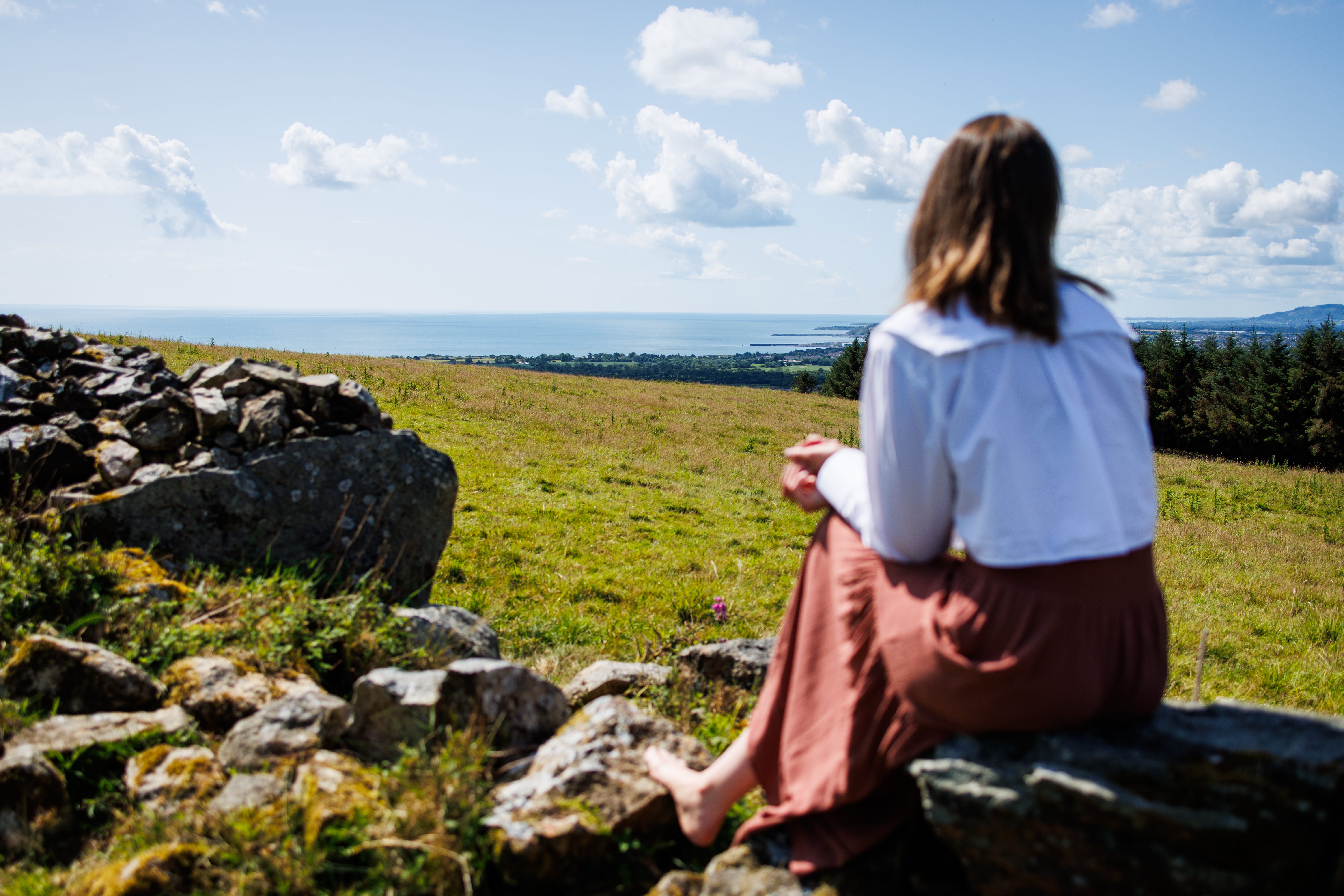
The email came through on August 1, The Festival of Lúnasa. That seemed about right:
"A Belinda, a chara,
Beatha agus sláinte chugat.
I coordinate the Online MA in Gaelic Literature and Culture (MAGLC) at UCC.
I am delighted to say that your application has passed academic review, and we are making a full offer on a place on the MAGLC programme. Congratulations!”
Even a month ago, neither this Masters programme nor the idea of going ‘back to school’ to do another Masters were on my radar. When I finished my PhD eight years ago, I was sure, full sworn, that my studenting days were over. But here we are. No going back. I replied “I accept” straight away.
I have this habit, maybe more a general trend, of blowing up my life every five years or so. I do some sort of huge pivot into something that has little to no relationship to what I was doing prior. I abandon whatever expertise or competence I may have built up in something, and I leave behind the connections and network I had built up around that something. It sounds idiotic and a little crazy but it always feels right.
This time, however, I am trying really hard not to be so extreme. Because the last big pivot I did was quitting my ‘proper’ academic job to do this—The Women of Ireland Project—and so, as my history tells me, if I was to do my usual pivot again now, it would mean leaving it behind so that something else could arrive and take its place.
And I really don’t want to do that.
I have been away from writing these Substack newsletters for a while. Not since March have I written or shared anything new, and so many months has it been I nearly didn’t know how to begin this post to you.
But my absence was for very good reason. I took a break from writing on Substack to focus on writing my long-standing work-in-progress: The Women of Ireland Project Book.
If you have been a subscriber here for a while you probably already have an awareness of its presence and the various ups-and-downs I have shared on writing it. But, in short, the ultimate goal of The Women of Ireland Project, of which one off-shoot is this Substack, has always been the writing of a book, which brings together the first-hand accounts of the 37 women I interviewed over several years with my socio-cultural analysis of the shared themes that came up in their stories. It has been the truest labour of love, one that has pushed me to examine aspects of myself I would rather have left dormant and challenged every pre-conception I ever had about being a woman of Ireland. And—I can’t believe I am actually getting to write this—I’m really pleased to now be able to tell you:
It EXISTS! Well, not quite in its final form, but I have, after years of research, completed the first full draft.
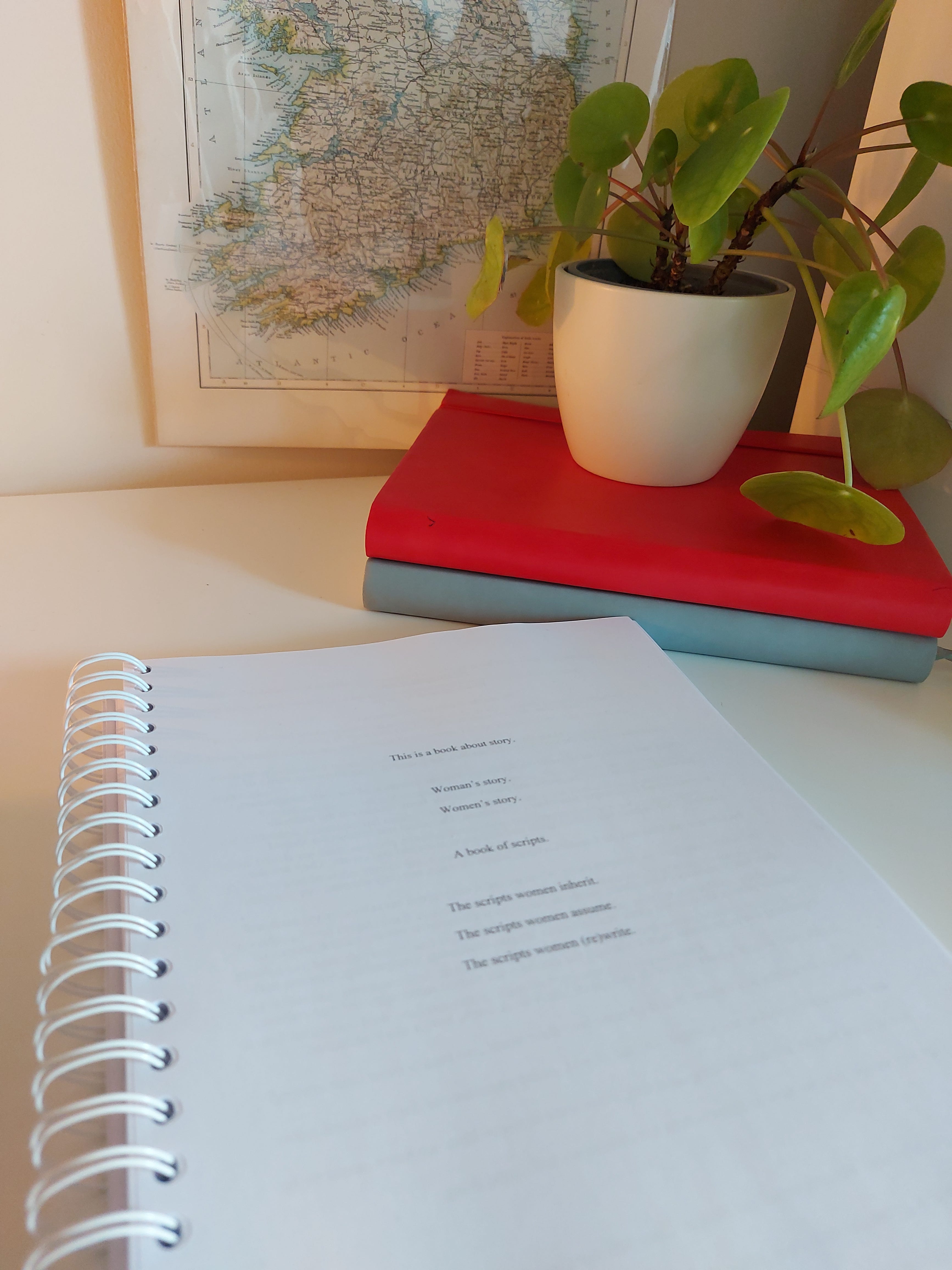
Turns out, that oft-quoted piece of writing advice “First make it exist, then make it good” really is excellent advice.
I am amazed by how the whole energy surrounding the book (and yes, I do refer to it and think of it as its own living, independent entity) has changed since completing this first draft. My relationship to it entirely altered by it now having a physical, tangible presence rather than existing only as ideas and concepts floating about me. In recent weeks, as I have returned to edit and rewrite it, I find myself engaged in a delightful beautification process that calls for a dreamy slowness. I read each sentence out loud and play with its rhythm. I think of the feeling I want each section to evoke. And I spend more time focusing on artistry and emotion than the dissemination of knowledge and core concepts. Such a different experience to the drudge-work it took to write the first draft, where most days were spent engaged in hours of research and analysis to produce a few sentences I was happy with. First draft was creating the content; second draft seems to be having fun with it.
But it’s not just the energy of the book that has changed since completing that first draft, it is also my own energetic relationship to the whole project. If writing the book was always my ultimate goal here, then I suppose it makes sense that my body is already stirring and bubbling and exciting itself with the possibility of imminent change now a finished book is on the horizon. I can feel myself conjuring up future endeavours, dreaming of the next possible reinvention, and readying myself for hitting the “Eject” switch that will fling me off into something new. But I am trying really hard to not to do that this time, because I don’t want to jettison all that I have learned and built over the last few years, I want, this time, to bring things with me—to evolve and re-frame rather than blow-up and pivot.
I really like Lynda Gratton’s concept of the Multi-Stage, or 100-Year, Life. It names the reality that very few of us live out that linear expectation of: go to school, graduate, maybe go to University, get a job, stay in that job, retire. Instead, Gratton calls for us to think of our lives in terms of different stages, were we cycle through a variety of phases—from education, to work, sabbaticals, career changes— several times in our life, endlessly reinventing and reimagining ourselves. At 36, my CV is already so littered by such multi-stage cycles, I have found myself—on more than a few occasions—apologising for it in job interviews! I have always perceived myself as ‘abnormal’ or ‘difficult’ in some way because I have not done the thing which Lynda Gratton thankfully says is dead or dying—get on a career path and stick with it.
So, all of this is simply to say that the few months I have been away from regularly writing this Substack publication seems to have coincided with (or perhaps created the space for) a period of reflection on what is it that I want next and how do I want to continue the work I have begun here with the Women of Ireland Project?
In truth, this is a question which has not yet resolved itself—I accept, instead, that while I have as yet no answers I am willing to be in flux, and remain open to whatever opportunities or answers arise. But what I do know is that I no longer wish to work as I have up to now—an entirely online and siloed individual. Instead, I long (like so many others) to sit in-person and in collaboration: to live more by what Donna J. Haraway, in Staying with the Trouble, might call sympoiesis (“collectively-producing systems” as opposed to the “self-producing,” autonomous units of autopoietic systems.) If I could have this Substack as a physical zine I posted out to each of you (as this recent article suggests), or a regular coffee-shop catchup or salon where we discuss ideas and experiences in person, I would. But until then, I remain constantly and consistently grateful to the more than one thousand of you who subscribe to receive my witterings here, and stuck around even when I wasn’t writing!
My return to University to do yet another Masters is not logical. Certainly not if measured by the normative expectations of the ‘traditional three-stage life’ Gratton explains we have long been expected to follow. I already have two degrees, a Masters, and a PhD, I simply don’t need to do another “university thing”.
But I don’t do it out of need but out of desire.
As many of you will have gleaned from the fact that most of my essays tend to focus on some aspect of Irish history, and often draw on myth, pre-Christian and early Christian Gaelic culture, and the development of Irish identity and connection to place over time, I have long had an underlying and innate interest in such things. But I have never had the opportunity to study them in anything but a self-led way. To have found a course on which I can study myth, (re)learn the Irish language, engage with female Irish poets, and even connect with place-names and a “sense of place” as conveyed through Gaelic literature is really exciting. But most importantly of all, it is how I am tending to that very important and unignorable voice within me which seeks a new challenge—which seeks the next thing in it’s multi-stage life—without blowing-up everything I have done before. In fact, I imagine it might just help bring together so many of the threads I already work with—story, women’s voice, history, myth, culture, identity—and keep me gently on the path.
I will, however, admit to quite a bit of trepidation at this rather recent and sudden decision to ‘go back to school.’ For nearly a decade I have worked on the other side of the Masters student-teacher divide—lecturing, teaching, supervising and supporting students. I wonder will I be able to do it? Will I be able to be a good student again? What would it say about me, as a so-called academic, if I’m late to submit my course-work or I don’t do that well? Will I manage the workload around my own work and personal life? What if I failed? How will I manage the course fees? What if I don’t enjoy it?
But these are but small worries that can keep you trapped from moving forward.
To pivot is to learn, and I think whenever you feel a bit stuck in life, embarking on some path of learning (whether that be formal, informal, embodied, practical, or personal) is a good way to get going again. That has been one of the most unexpected take-aways I have personally carried from having had 37 women share their life stories with me—women are always reinventing themselves, going back to school, taking night classes, going on a course, quitting a job, starting their own business, reimagining their life during and after children if they are mothers. Not one woman I interviewed could be defined by something as singular as a keyworded job title. And, as simple as it sounds, seeing that in other women’s lives has made me determined never again to apologise for my dynamic and diverse C.V. Because, as one woman I interviewed replied to my querying of “How had she done it, how had she gone back to school, and done all her training and education, alongside all her other commitments!?”:
“I’ve had the privilege of seeing other women do it. So to go back to your question, ‘How do I do it?"‘ I do it because other women have done it.”
If ever you are unsure of your next steps in life, look around you. We are surrounded by adaptable, capable, diverse, multi-dimensional, ever-changing, ever-evolving people, and if they’ve done it, so can you.
The Women of Ireland Project is a labour of love, freely shared to all and always will be. However, if you have found something meaningful here, or in the past, and would like a way to support my ongoing work, research and writing, you can “Buy me a coffee” via the link below. Your support is so appreciated:
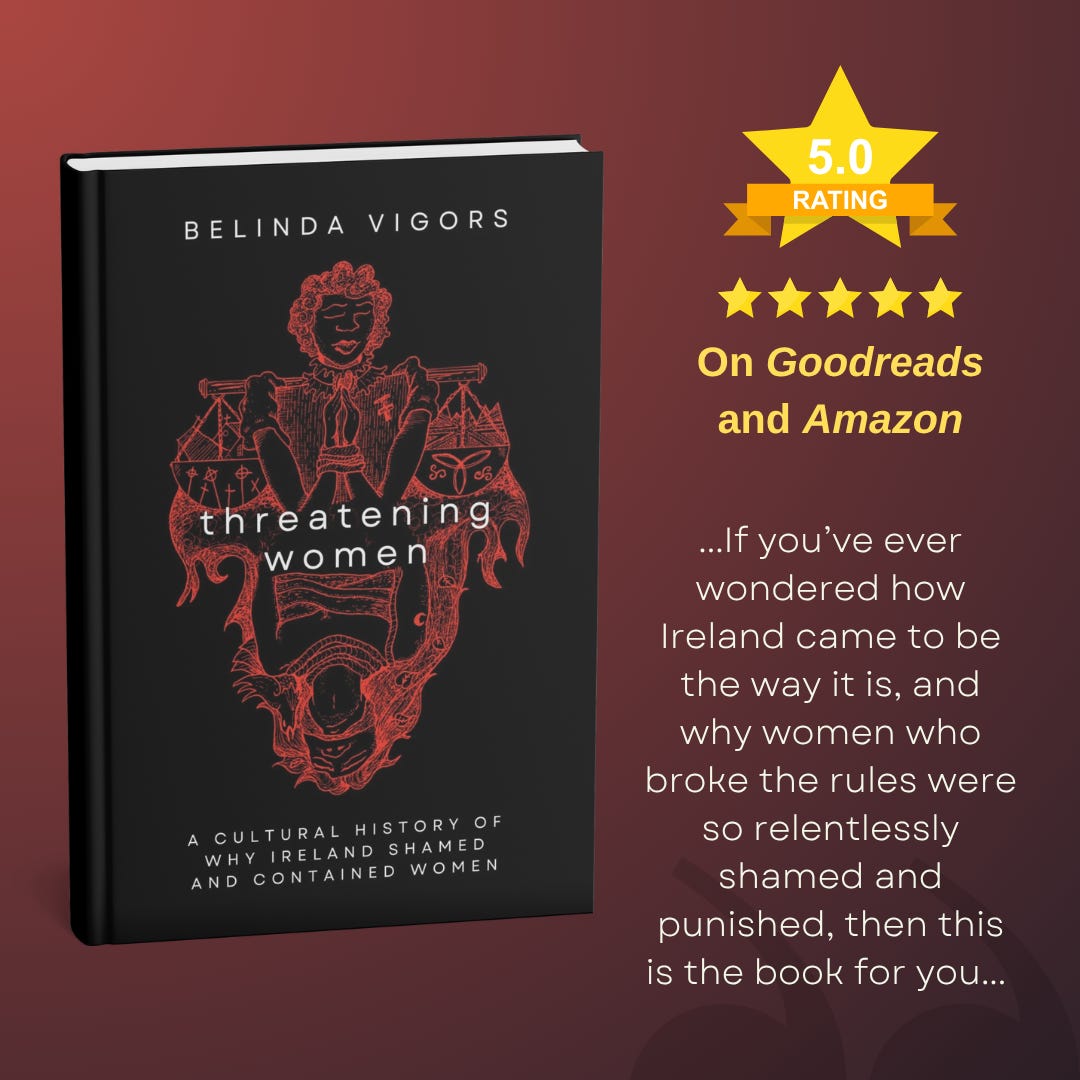
Get my book Threatening Women: How Ireland Shamed and Contained Women on Amazon, or from Independent Irish seller, buythebook.ie
I checked out that course, it looks amazing, and so great you can do it online! I think you will enjoy every moment of it.
Comhghairdeas leat! I’m really excited for you with this next chapter and learning journey!